
Swimming pool contractors in Dubai and the build decisions you pay for later
Most of the pools our repair crews open up in Dubai were built by other swimming pool construction companies in Dubai, and nearly every fault we find goes back to one decision made before the first bucket of soil came out. This guide is for owners comparing pool contractors in Dubai who would rather pay for those decisions once, at the build, than again every few summers.
We are Green Creation. We design and build pools, and we also run the maintenance and repair side, including in-house commercial divers who work underwater without draining the pool. That second job is the reason this article exists. When you spend your week fixing pools that are eight, ten or twelve years old, you stop thinking about swimming pool construction Dubai-style as a six-week project. You start thinking about it as a forty-year one.
So this is a construction guide written backwards. Every section starts from a fault we are called out to fix, traces it to the build choice behind it, and then says what a sound contractor should put in writing before you sign.
⚡ Short answer
The best swimming pool contractors in Dubai are the ones who will commit, in writing, to the details that cause repair bills later: concrete cover to the steel, a witnessed 48-hour flood test, pressure-tested pipework, a four-hour turnover, epoxy or high-grade grout, movement joints in the deck, proper bonding of metalwork and a plant room you can stand up in. Green Creation builds to that list and then maintains the pool afterwards, so the company that built it is the one answering the phone when something goes wrong.
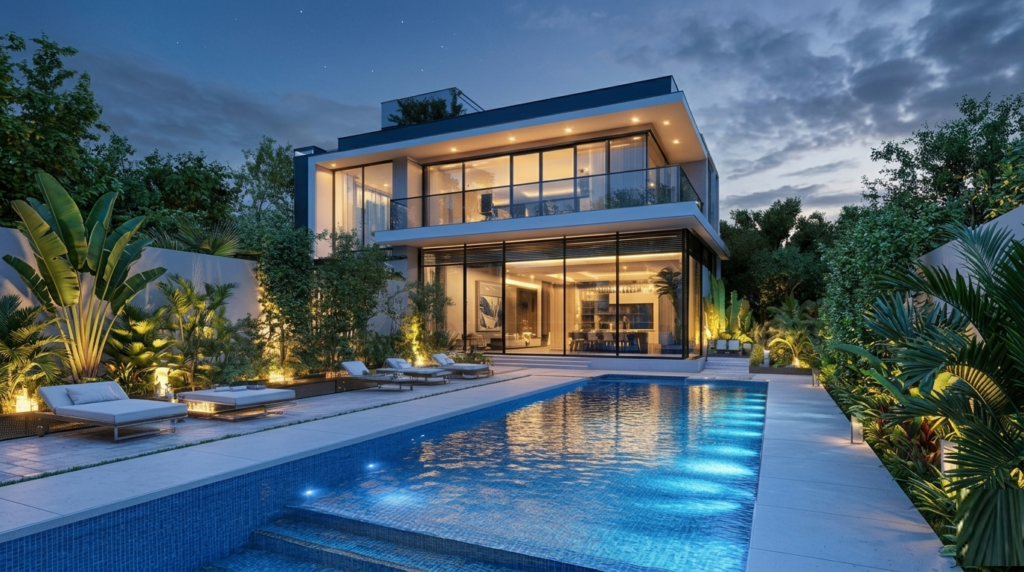
A Green Creation villa pool. The parts that decide how it ages are the ones you can’t see in a photo.
📋 What’s in this guide
- Why we look at construction from the repair side
- Contractor, construction company or pool builder
- Sixteen faults and the build decision behind each one
- The shell and the steel inside it
- Waterproofing and the flood test
- Pipework you will never see again
- Turnover, pumps and filtration
- The plant room
- Tiles, grout and the water that eats them
- Coping, deck and movement joints
- Lighting, bonding and electrical safety
- The garden around the pool
- What gets buried at each stage of the build
- Dubai conditions that speed up every fault
- Dubai rules your contractor must build to
- Fifteen years of ownership, cheap build versus sound build
- Build and repair costs in Dubai
- How to choose between pool contractors in Dubai
- Why Green Creation
- After handover
- Further reading
- Frequently asked questions
Why we look at construction from the repair side
A new pool looks perfect on handover day. The water is clear, the tiles are clean and the lights work. Almost every pool in Dubai looks like that in its first month, which is why photos and showroom visits tell you very little about a builder.
The real test comes later. Somewhere between year three and year ten, a badly built pool starts sending bills. The water level drops a centimetre a day more than evaporation explains. Grout lines go soft and sandy. The pump screams in August. A crack appears where the coping meets the deck. The owner calls a pool service company, and that is often where we come in.
We have been doing this work in the UAE for close to two decades. We started as a landscaping company, added pools, and then built out a maintenance and swimming pool repair division because our own clients kept asking us to look after what we had built. Over time, more of the repair calls came from pools built by other firms. Those pools taught us more about construction than any textbook.
Here is the pattern. A repair almost never fails because of bad luck. It fails because a contractor saved a small amount of money or time at a stage that was about to be covered up. Twenty millimetres less concrete over the steel. A pipe joint that was never pressure tested. A pump chosen because it was in stock. A deck poured tight against the coping with no joint. None of those savings is visible at handover. All of them show up later.
That is the lens for the rest of this guide. If you are about to hire one of the swimming pool construction companies in Dubai, the useful question is not “Who has the nicest portfolio?” It is “who will put the invisible details in writing, and who will still be around to stand behind them.”
Contractor, construction company or pool builder
People search for swimming pool contractors in Dubai, pool contractors in Dubai and swimming pool construction companies in Dubai as if they were the same thing. In practice they cover a few different kinds of business, and knowing which one you are talking to saves a lot of confusion later.
Turnkey pool contractors
A turnkey contractor takes the whole job. Design, structural drawings, authority approvals, excavation, shell, waterproofing, plumbing, plant room, electrics, tiling, deck, commissioning and handover. One contract, one warranty, one number to call. This is what most villa owners want, and it is how we work on the majority of private projects. Our pool builders in Dubai page covers that service.
Pool subcontractors to a main contractor
On new villas, hotels and towers, the pool is usually one package inside a bigger building contract. The main contractor pours the structure, and a specialist pool firm handles the pool shell details, waterproofing, hydraulics, equipment and finishes. We do a lot of this work too, for developers and main contractors on projects up to Olympic size. If you are a developer, our page on commercial swimming pool construction explains how we slot into a main contract.
Design-only firms
Some firms draw the pool and hand the drawings to someone else to build. That can work well on large projects with a consultant supervising. On a villa it tends to leave a gap between what was drawn and what was poured, and nobody owns the gap. Our pool design team works inside the same company as the build crews for that reason.
Maintenance-only companies
Plenty of Dubai firms clean and service pools but do not build them. They can be very good at water chemistry. They are usually not set up to fix a structural leak, re-plumb a return line or rebuild a plant room. It is worth knowing this before you sign a maintenance contract with someone who will have to call a third party the first time something serious breaks. We cover this in more detail on our pool maintenance page.
Landscaping companies that “also do pools”
This one is close to home, since we started in landscaping. Some garden firms take on a pool and subcontract the whole thing to whoever is cheapest that month. The owner thinks they hired one company and,, in fact,, hired three. Ask directly who will pour the shell, who will do the waterproofing and who will fit the plant room, and ask to meet them.
Sixteen faults and the build decision behind each one
This table is the spine of the article. The left column is what an owner notices, usually years after handover. The next column is the construction decision we most often find behind it when we open the pool up. The third column is what to ask your contractor to commit to before work starts. The last column is a rough idea of what the fault costs to put right later on a typical 8 x 4 m villa pool. Those figures are indicative market ranges, not a quotation, and a real price depends on access, finish and how far the damage has spread.
| What the owner sees | Build a decisionon behind it.. | Put this in the contract.. | Typical fix later (AED) |
|---|---|---|---|
| Water level drops faster than evaporation.. | No flood test, or a test held for a few hours instead of days | Witnessed a floodod test of at least 48 hours with a control container beforetiling | 1,000-2,500 to find, 5,000-40,000+ to fix |
| Rust stains bleeding through plaster or grout.. | Too little concrete cover over the steel, or steel sitting on the ground during the pour | Minimum cover stated on drawings, spacers used, cover checked before the pour | 8,000-60,000 depending on spread |
| Hairline cracks in the shell or at a wall-floor line | Cold jointss left in the wrong place, poor curing in summer heat | Forsequence and joint positions on drawings, waterstop in any construction joint, and and a written curing method | 3,000-25,000 |
| The poolpool shell has lifted or tilted after being drained.. | No allowance for groundwater uplift on a high water table plot | Uplift check in the structural design, hydrostatic relief where the ground calls for it, and and a drain-down procedure in the handover file | Often a rebuild |
| Damp patches in the plant room or basement wall next to the pool | Pipe penetrations through the wall sealed with mortar only | Puddle flanges or sealing collars at every penetration, detailed on drawings | 3,000-15,000 |
| Leak that only appears when the pump runs | Return-line joints were were never pressure tested before backfill.. | Pressure test of every line, held and recorded, before any trench is closed | 2,000-20,000, or or more if the deck must be cut |
| Cloudy water that chemicals never quite fix | Undersized pump or filter, too few inlets, poor circulation pattern | Turnover of four hours or better, inlet count per Dubai Municipality rules, hydraulic calculation on file | 6,000-25,000 to resizeand re-plumb |
| High electricity bill, noisy pump | Single-speed pump bought on price, oversized for the job | Variable-speed pump, pump model and duty point stated on the quote | 4,000-9,000 to replace, plus the extra power already paid |
| Grout lines soft, sandy or washing out | Standard cement grout in a pool topped up with low-calcium water | Epoxy grout, or a pool-rated cementitious grout with water chemistry targets written into maintenance | 8,000-20,000 to re-groutt |
| Tiles popping off, hollow sound when tapped | Wrong adhesive class, no waterproofing under tiles, poor coverage on the back of each tile | Flexible, water-resistant adhesive class stated, full-bed method, pull-off sample on request | 5,000-60,000 |
| Crack running along the coping line | The deckdeck poured tight against the coping, with with no movement joint.. | A flexible movement joint between coping and deck, and joints in the deck itself | 3,000-18,000 |
| Water pooling on the deck, algae at the edges | Deck laid flat or falling toward the pool | Deck fallss away from the pool atleast 1:40, with drainage shown on drawings.. | 6,000-30,000 |
| Tingless in the water, earth-leakage trips | Metal parts not bonded, lights on the wrong voltage | Equipotential bonding of all metalwork, low-voltage pool lights, earth-leakage protection, and and test certificate at handover | 2,500-12,000 |
| The pumppump motor burns out every two summers.. | Plant room with no ventilation or shade, equipment packed in with no service space | Plant room size, ventilation and drainage are are shown on drawings; there is there is room to remove each piece of kit.. | 3,000-8,000 per motor, again and again |
| Roots in pipework, damp around planters | Planting and irrigation designed separately from the pool | One design for pool and garden, root barriers and setbacksfor trees, and and irrigation kept off the deck.. | 3,000-20,000 |
| Nobody answers the phone.. | The contractorctor was a trading name that closed orsub-let the whole job.. | A company that builds and maintains awritten warranty andand a handover file with every test record | Whatever the next contractor charges |
Swipe the table sideways to see every column.
If you read one thing in this article, read that table and take it to every contractor you meet. A serious builder will go through it line by line without blinking. A weak one will tell you that all of this is “standard” and does not need writing down. It does.
The shell and the steel inside it
The shell is the concrete box that holds the water. In Dubai it is usually one of four types: cast-in-place reinforced concrete, sprayed concrete (gunite or shotcrete), blockwork with a reinforced core and render, or a factory-made fibreglass shell. Each can last a very long time. Each can also fail early if the details are wrong. Our guide to pool construction materials for Dubai’s climate compares them in depth, so here we will stick to the failures.
Coverthe steel..
Reinforcing steel lasts as long as the concrete around it keeps water and salt away from it. The thickness of concrete between the steel and the surface is called the cover.ver. On a pool, the inside face is wet forever,, and the outside face sits in soil that, in much of Dubai, carries chlorides and sulphates.. When cover is thin, chlorides reach the steel within a few years. Steel rusts, rust takes up more room than steel, and the concrete in front of it cracks off. You see it first as orange stains bleeding through the grout.
The fix at the constructiontion stage is cheap. Plastic or concrete spacers under and beside the steel cage, a stated minimum cover on the structural drawings, and someone who checks it before the pour. The fix later means cutting out concrete, treating or replacing steel and patching, and then re-tiling over the top.
Concrete mix and curing
For a pool in Dubai ground, the concrete itself matters. Sulphate-resistingg cement or a blended mix with a low water-cement ratio slows chemical attack from the soil. Cube samples taken on the day and tested at a lab tell you whether the concrete that arrived matches what was ordered. Ask for those results. A contractor who has them will hand them over. One who does not will change the subject.
Curing is the other half. Concrete poured at 44°Cin July and left in the sun dries out too fast at the surface. It cracks in a fine map pattern, and those cracks become water paths. Good crews pour early in the morning, keep the surface wet or covered for days afterwards and write down how they did it.
Construction joints
A shell is rarely poured in one go. Where one pour meets the next, you get a construction joint, and an unplanned one (a cold joint) is a favourite path for leaks. The joint positions should be on the drawings, with a waterstop in each. When we investigate a leak and find a horizontal crack around the whole pool about 300 mm above the floor, it is almost always a floor-to-wall joint with no waterstop.
Uplift on a high water table
On reclaimed land and on plots near the coast, groundwater can sit close to the surface. A full pool is heavy enough to stay put. An empty one can float like a boat. We have seen shells lift and crack after an owner drained a pool for re-tiling without knowing the risk. The structural design should check uplift. Where it is a real risk, the pool needs extra dead weight, ground anchors or a hydrostatic relief valve, and the handover file should say, in plain words, how to drain the pool safely. Our article on pool structural and surface integrity covers how we inspect for this on existing pools.
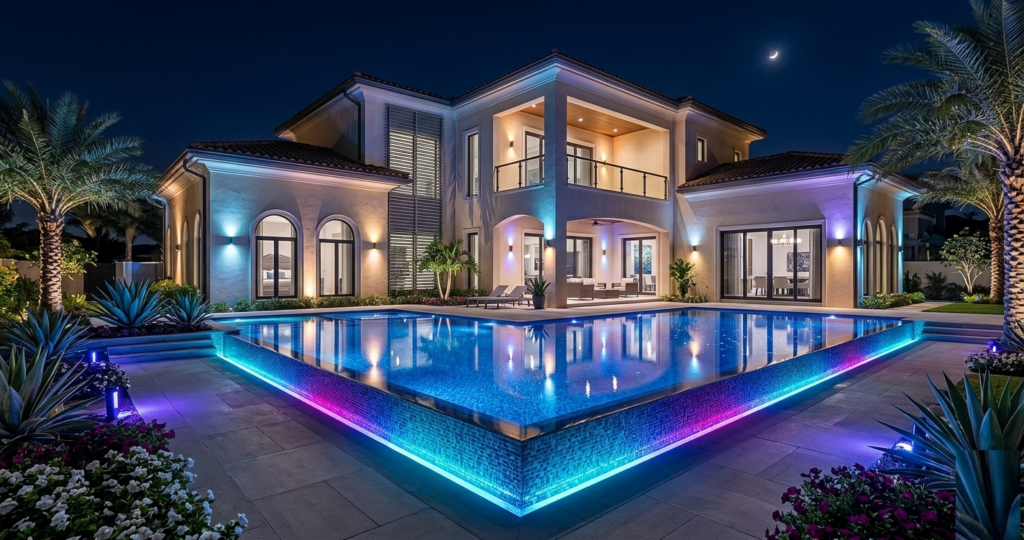
Once the shell is tiled and the deck is laid, nobody sees the steel again. That is why it gets checked before the pour.
Waterproofing and the flood test
Concrete on its own is not waterproof. Good concrete leaks very little, but “very little” across 70 or 80 square metres of wetted surface, every day, for decades, adds up. So pools get a waterproofing layer, and in Dubai the usual choices are cementitious coatings, crystalline admixtures or coatings that grow crystals into the concrete pores, and sheet or liquid membranes. On podium and rooftop pools,, the structure below needs its own protection too, which is where products like torch-applied membrane waterproofing come in.
The product matters less than two things. The first is the detailing at corners, joints and pipe penetrations, which is where waterproofing actually fails. The second is proving it works before the tiles go on.
What a real flood test looks like
The pool is filled in stages, not all at once, so the structure takes the loadload gradually. It is then held full for at least 48 hours, and often 72. A bucket or container of water sits on the step or deck beside it as a control, so evaporation can be measured and subtracted. Levels are marked and recorded at the start and end, with dates, times and signatures. If the pool loses more than the control, the contractor finds out why before a single tile is laid.
It sounds simple. It is also the step most often skipped, because it adds three or four days to the programme and ties up water. When a pool that was never flood tested starts leaking, the leak is behind the tiles, and finding it means dye tests, pressure tests, acoustic listening and sometimes a diver. Our page on detecting and repairing pool leaks in Dubai explains that process.
⚠️ Ask for the record, not the promise..
Every contractor will say they do a do a flood test. Ask to see the flood test sheet from a recent job, with levels and times filled in. Then write into your contract that you, or your consultant, will be invited to witness yours.
Pipework you will never see again..
A villa pool has somewhere between 40 and 100 metres of buried pipe. Suction lines from the main drains and skimmers, return lines to the inlets, a balance line on overflow pools, and conduits for lights and sensors. Once the trenches are backfilled and the deck is poured on top, that pipe is gone from view for the life of the pool.
The faults we find in pipework are boringly consistent. Solvent-weld joints that were never fully pushed home. Pipe of too low a pressure class. Bends are are made with too many elbows instead of long-radius fittings, which strangles flow and makes the pump work harder. The pipe ispipe is laid on rubble instead of a sand bed, so it cracks when the ground settles. And, most of all, lines that were never pressure tested.
The pressure test
Each line is capped, pressurised with water or air and held for a set time while a gauge is watched. If the gauge drops, there is a leak,, and it gets found while the trench is still open. The test sheet goes in the handover file. It takes an afternoon. Skipping it saves that afternoon and can cost the owner a cut-up deck later.
Suction safety
Main drains must be anti-entrapment. That means two drains per suction line, set far enough apart that a body cannot cover both, with covers rated for the flow. Dubai Municipality’s pool guidelines require at least two main drains, and good practice adds a safety vacuum release on the pump. A single drain with an old-style flat grate is a safety hazard and should be treated as one. Our article on pool safety standards in Dubai goes further.
Turnover, pumps and filtration
Turnover is the time it takes for the whole volume of the pool to pass through the filter once. Dubai Municipality’s technical guidelines for pool plans set it at four hours. That single number decides the size of the pump, the size of the filter, the pipe diameters and how many inlets the pool needs. The same guidelines ask for at least one inlet for every 45 cubic metres of water and at least two skimmers.
Here is a worked example. An 8 x 4 m pool with an average depth of 1.4 m holds about 45 cubic metres. To turn that over in four hours, the system has to move roughly 11 cubic metres an hour through the filter, after allowing for the friction of every pipe, bend, valve and the filter itself. That is a modest flow, and it is exactly why so many villa pools have the opposite problem to the one owners expect. The pump is too big, not too small.
Why oversized pumps are a problem
A big single-speed pump pushes water through the filter faster than the media is designed for, so dirt goes straight through. It is loud. It wears its own seals. And it burns electricity for eight or ten hours a day. Swapping it for a variable-speed pump (VSD) that runs slowly for most of the day and faster only for cleaning or water features typically cuts pump energy by somewhere between 40% and 70%. Pump power rises with roughly the cube of speed, so running at half speed draws about an eighth of the power.
Your quote should name the pump brand and model, the filter type and size, and the design flow. If it says “pump and filter as required”, that is a blank cheque written in the contractor’s favour. We explain the engineering in more detail in hydraulic flow rate assessment and filtration system engineering.
Filters and Dubai dust
Sand filters are the most common choice in Dubai villas, with glass media now a popular upgrade because it traps finer particles and backwashes with less water. Cartridge filters save water but need more hands-on cleaning. What matters is sizing. Fine dust blows into Dubai pools most days and turns into a filtration load as well as a cleaning chore. A filter sized at the bare minimum clogs quickly, backwashes often and wastes water. We usually size up one step. Our notes on filter media maintenance and choosing a filtration system cover the options.
Dosing and treatment
The cheapest build leaves chemical dosing to a person with a bucket. That works if the person comes often and knows what they are doing. A better build adds automatic pH and chlorine (ORP) dosing with in-line probes, or a salt chlorinator, and often UV as a secondary treatment. In Dubai, where summer water temperatures reach the low thirties and chlorine burns off fast, automatic dosing holds the water steady between visits. See our pages on controlled chemical dosing and saltwater pools in Dubai.
The plant room
If you want to judge a pool contractor quickly, ask to see a plant room they built five years ago. It tells you more than any brochure.
The plant room is where the pump, filter, dosing, heater or chiller, control panel and valves live. In a lot of Dubai villas it ends up as an afterthought: a box squeezed under a staircase ora pit in the garden with a steel lid. The equipment inside is packed so tight that changing a pump means cutting pipes. There is no ventilation, so the room hits 55°Cin August,, and motors cook. There is no floor drain, so the first leak floods the lot.
A plant room that lasts has these things:
- Enough floor area to walk in, stand up and lift any single item out without moving the others.
- Cross-ventilation or a fan andshade from direct afternoon sun.
- A floor drain or sump, because every plant room leaks sooner or later.
- The pump is is sited at or below pool water level where possible, so it stays primed.
- Valves labelled and a simple schematic on the wall, so any technician can understand it.
- Unions on either side of the pump and filter, so they come out without cutting.
None of that costs much at the designsign stage. It costs a great deal once the villa is built around a room that is too small. Our article on keeping pool equipment in shape shows what we check on our service visits, and pump, motor and electrical diagnostics cover the faults that heat causes.
Tiles, grout and the water that eats them
Dubai’s main water is desalinated. It arrives very soft, with low calcium hardness. Water that is short of calcium goes looking for it, and the nearest source is the cement in your grout and plaster. Over a few years, standard cement grout goes soft, then sandy, then starts washing out of the joints. Tiles lose their bond. Plaster finishes get rough and etched.
There are two defences, and a good contractor uses both. The first is at the build: epoxy grout, or a cementitious grout designed for pools, and a flexible, water-resistant tile adhesive with full coverage on the back of each tile. The second is in the water: keeping calcium hardness and alkalinity in range so the water is not aggressive. Evaporation in summer also concentrates stabiliser (cyanuric acid) in outdoor pools, which weakens chlorine and makes owners add more of it. Our pages on pH and alkalinity stabilisation and water chemistry management explain the targets.
Choosing the finish
Glass mosaic is the most common finish in Dubai villas. It holds colour well in strong sun and is easy to clean. Porcelain and natural stone suit certain designs but need the right adhesive and grout more than glass does. Plaster and pebble finishes are cheaper to install and give a softer look, but they are more sensitive to water chemistry in soft-water areas. Our guides on choosing pool tiles in Dubai and what the best contractors specify for tiling compare them.
Whatever the finish, one detail matters more than the tile itself. The tiles must go onto a surface that has been waterproofed and flood tested. Tiles are a finish. They were never meant to hold water back.
Coping, deck and movement joints
The pool shell and the deck around it move differently. The shell is massive and sits in water at a fairly stable temperature. The deck is thin, sits in direct sun and can swing 30 or 40 degrees between a summer afternoon and the night. If the two are locked together with no joint, something has to give, and it is usually the coping.
A sound build puts a flexible movement joint between the coping and the deck and further joints across large areas of the deck. It lays the deck to fall away from the pool, at least 1 in 40 according to Dubai Municipality guidance, so rain, splash and wash-down water drain to the garden or a channel rather than back into the pool. The DM guidelines also call for a deck at least one metre wide around private pools and 1.5 metres around public ones, and a deck area at least equal to the water area.
The deck surface should stay cool enough to walk on and grip when wet. Light-coloured natural stone and some porcelain tiles do well. Dark stone looks good in a render and burns feet in real life. Our article on designing the pool area covers materials and layout.
Lighting, bonding and electrical safety
Water and electricity together are where shortcuts turn dangerous. The rules are well known and not expensive to follow:
- Underwater lights should run at extra-low voltage, usually 12 V, from a safety transformer outside the pool zone.
- Every metal part in and around the pool (ladders, handrails, light niches, the steel in the shell, pump bodies) should be connected by an equipotential bonding conductor, so there is no voltage difference between them.
- Pool circuits need earth-leakage protection (an RCD), tested at commissioning.
- The installation should be done by a licensed electrician and signed off, with the test certificate in the handover file.
When owners tell us they feel a slight tingle getting out of the pool, or the earth-leakage breaker keeps tripping, the cause is almost always missing bonding or a failed light seal. LED lights are now the norm. They use roughly 80% less power than old halogen fittings and last far longer, but they still need proper sealed housings and cable glands.
The garden around the pool
We began as a landscaping company, so we notice this one more than most. A pool and a garden are usually designed by different people. The pool firm draws the pool. A landscaper arrives six months later and plants a row of palms two metres from the shell, runs irrigation across the deck and sets a lawn that drains towards the coping.
The results turn up in our repair diary. Roots are finding cracked pipe joints. Irrigation water is soaking the ground beside the shell. Leaves and grass clippings are loaded into the skimmers and the filter every day. Sprinklers wetting the deck and leaving hard water marks on the stone.
When one team designs both, the problems are solved on paper. Trees that drop a lot of leaves go downwind or further away. Large palms get root barriers. Drip irrigation replaces spray near the pool. Planting beds drain away from the deck. Our article on integrating the pool with the garden shows how we plan them together, and our garden projects have examples.
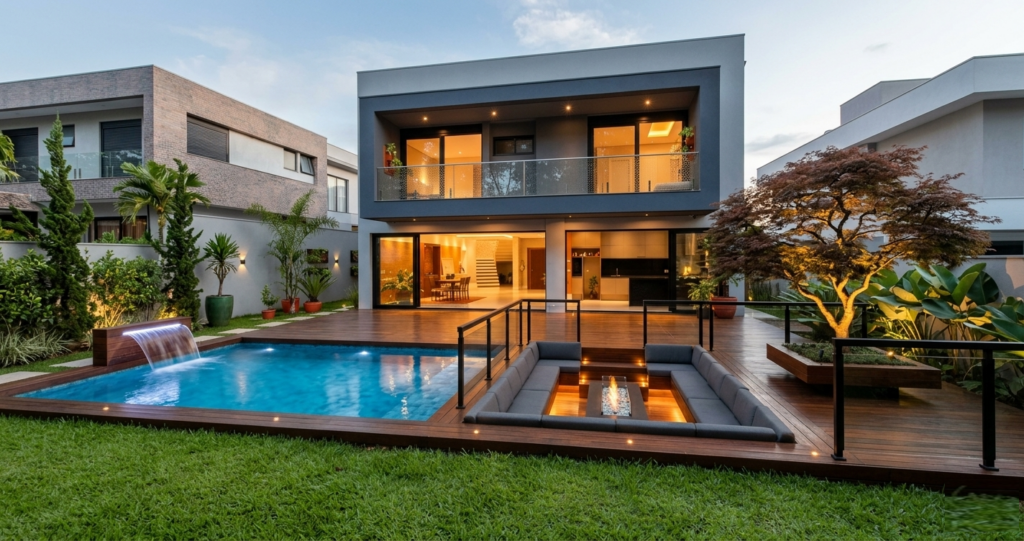
The pool and planting are planned as one job, so the garden does not end up loading the filter.
What gets buried at each stage of the build
A pool build is a series of moments where something is about to be covered up for good. Each one is a chance to check the work, and the last chance to fix it cheaply. We organise our own site inspections around these moments, and we suggest owners do the same. You do not need to be an engineer. You need to know when to turn up and what to ask for.
| Stage | What gets covered up | Check before it goes. | Record for your file |
|---|---|---|---|
| Excavation | The ground under the pool | Formation level, soil type, any groundwater, blinding concrete laid | Photos and a soil report if taken |
| Steel fixing | The reinforcement cage | Bar sizes and spacing match drawings, spacers in place, cover correct, waterstops fitted | Steel inspection sign-off, photos with tape measure |
| Pipe sleeves and fittings in the walls | Every penetration through the shell | Puddle flanges or collars on each; positions match the hydraulic drawing. | Marked-up drawing |
| Concrete pour | The steel, for good | Mix delivered matches order, cubes taken, pour sequence followed | Delivery tickets, cube test results |
| Curing | Surface quality of the shell | The surface is kept wet or covered for the stated period. | Curing log |
| Trenching and pipework | All buried pipes | Pipe class, sand bed, long-radius bends, pressure test on every line | Pressure test sheets |
| Bonding and conduits | Earth bonding and cable routes | Bond conductor connected to shell steel and every metal item | Continuity readings |
| Waterproofing | The shell surface | Corners, joints and penetrations detailed, then a 48- to 72-hour flood test | Flood test sheet with levels and control |
| Tiling | The waterproofing | Adhesive type, coverage, grout type, movement joints | Product data sheets, batch numbers |
| Deck and coping | Trenches, pipework, bond wires | Fall away from pool, movement joint at coping | Level survey or photos with a spirit level |
| Commissioning | Nothing, but this is where the promises are tested. | Measured flow, turnover time, water balance, safety devices working | Commissioning sheet, equipment manuals, warranty cards |
Swipe the table sideways to see every column.
Put those records together, and you have a handover file. It is the single most useful thing you can own as a pool owner in Dubai. It helps any future technician, it helps a buyer if you sell the villa, and it is what we ask for first when we are called out to a problem. For the step-by-step process from our side, see our pool construction process and what to expect during construction.
Dubai conditions that speed up every fault
A pool built to the same drawings would age more slowly in Manchester or Melbourne than in Dubai. That is not a reason to worry. It is a reason to build for the place. These are the local conditions we design around.
Heat
Air temperatures in the mid-forties and pool water in the low thirties through summer. Concrete cures too fast if left exposed. Plant rooms overheat. Chlorine burns off in hours. Pool water gets too warm to be refreshing, which is why chillers are now a common request. Our article on pool heating and cooling in Dubai covers chillers and heat pumps.
Evaporation
An outdoor pool can lose close to a centimetre of water a day in peak summer from evaporation alone. That water leaves its minerals and stabiliser behind, so the chemistry drifts. It also makes leaks hard to spot, because owners assume every drop in level is the sun. A pool cover can cut evaporation by up to around 95% while it is on.
Soft top-up water
Desalinated water is low in calcium, which is why grout and plaster suffer here faster than in hard-water countries. The build answer is grout and finishes that tolerate it. The maintenance answer is balancing the water.
Dust and sand
Fine dust lands in the pool most days, and on some days a lot of it. It shows up as a cloudy pool and a filter that needs washing more often. Filters sized with a margin and good skimmer placement deal with it.
Ground and groundwater
Many Dubai plots have sandy soil with salts in it, and near the coast or on reclaimed land, the water table can be shallow. Salts attack concrete and steel from the outside. Groundwater pushes up on an empty shell. Both are handled in the structural design, as long as someone thinks about them. Communities like Palm Jumeirah behave very differently from inland plots in Arabian Ranches or Dubai Hills, which is covered in our guide to the best residential communities for private pools.
Our environmental pool maintenance page and preparing your pool for summer explain how we handle these on the maintenance side.
Dubai rules your contractor must build to
Which authority approves your pool depends on where the villa is. Most of mainland Dubai falls under the Dubai Municipality. Some areas come under Trakhees or the Dubai Development Authority. Most gated communities also need a no-objection certificate from the master developer before any authority will look at the drawings. A good contractor handles all of this for you and knows which route applies to your plot. Our guides to Dubai Municipality pool permits and pool permit regulations explain the process.
The technical rules below come from Dubai Municipality’s guidelines for approving swimming pool plans. They are the ones we see ignored most often on pools we are later asked to fix.
| Rule | What it asks for | What goes wrong when it is ignored? |
|---|---|---|
| Turnover | The whole pool volume is filtered every four hours. | Cloudy water, algae, high chemical use |
| Inlets | At least one inlet per 45 m³ | Dead spots where algae starts |
| Skimmers | At least two | Floating debris sits in one corner. |
| Main drains | At least two, anti-entrapment | Suction entrapment risk |
| Deck width | At least 1 m for private pools, 1.5 m for public pools | Cramped, slippery edges |
| Deck area | At least equal to the water surface area | Overcrowding around public pools |
| Deck fall | 1:40, away from the pool | Dirty water running back into the pool |
| Floor slope | No steeper than 1:3 | Swimmers slipping into deep water |
| Ladders | Where depth exceeds 60 cm, one per 30 m of perimeter | No easy way out of deep water |
| Handrails | On steps where depth is over 1 m | Falls on entry |
| Barrier | Around 1.2 m high where required | Child access to the water |
| Depth markings | Clear markings at the edge | Diving into shallow water |
| Children’s pools and jacuzzis | Children’s pools no deeper than 50 cm, jacuzzis no deeper than 90 cm with an emergency stop | Drowning and entrapment risk |
| Dosing on public pools | Automatic chemical dosing | Unsafe water between manual checks |
Swipe the table sideways to see every column.
Typical approval times run from about one to three weeks for a straightforward mainland permit, and longer in communities where the developer NOC comes first. Fees for NOCs, structural design and plans are modest next to the build cost, often a few thousand dirhams in total, though some developers also ask for a refundable deposit against damage to roads and landscaping. Our pool compliance page covers the rules that apply once the pool is running.
Fifteen years of ownership: cheap build versus sound build
Owners usually compare quotes on the day. It is more honest to compare them over the life of the pool. Below are six build decisions where the cheaper option saves money at signing and then gives it back, with interest, over the following fifteen years. The figures are rough and based on an 8 x 4 m villa pool. They are there to show the size of the gap, not to price your project.
| Decision | Extra cost at the build (AED) | What the cheaper option tends to cost over 15 years (AED) |
|---|---|---|
| Variable-speed pump instead of single-speed | 2,500-4,000 | About 15,000 in extra electricity (worked out below) |
| Epoxy grout instead of standard cement grout | 4,000-8,000 | 16,000-40,000 for two regrouts, plus drain-down and refill each time |
| Witnessed 48-72 hour flood test | A few days on the programme and one fill of water | 6,000-40,000 if a leak shows up behind the tiles |
| Pressure-tested pipework | An afternoon of labour | 2,000-20,000 per buried leak, more if the deck is cut |
| Ventilated, full-size plant room | 1,500-4,000 | 6,000-24,000 in early motor and equipment failures |
| Movement joint at the coping | A few hundred | 3,000-18,000 to repair a cracked coping line |
Swipe the table sideways to see every column.
How the pump figure works
A typical 1.5 kW single-speed pump running eight hours a day uses about 4,380 kWh a year (1.5 x 8 x 365). A variable-speed pump doing the same filtration at a lower speed commonly uses 60% less, so around 1,750 kWh. The difference is roughly 2,630 kWh a year. Villas in summer sit in DEWA’s higher tariff slabs, and with the fuel surcharge, an average of about AED 0.40 per kWh is a fair working figure. That comes to around AED 1,050 a year, or close to AED 15,800 over fifteen years, before counting the longer life and lower noise of the slower pump. Your numbers will differ with pool size and run time. The direction will not.
Add the six rows together, and the “cheap” build can easily cost AED 50,000 to 150,000 more over fifteen years than the one that looked more expensive on the day. Our articles on budget versus high-end pools and energy-efficient pool equipment look at this from other angles, and reducing pool maintenance costs covers the running side.
Build and repair costs in Dubai
Prices move with design, access, finish and equipment, so treat these as market ranges rather than quotes. They exclude VAT. For a proper figure, we visit the site, look at access and ground, and itemise the quote line by line. Our article on the cost of building a swimming pool in Dubai goes into more depth.
New pool construction
| Pool type | Typical Dubai range (AED) | Notes |
|---|---|---|
| Plunge pool | 55,000-120,000 | Small footprint, often with a chiller |
| Fibreglass shell pool | 75,000-180,000 | Faster installation, limited shapes, crane access needed |
| Concrete villa pool, around 6 x 3 m | 90,000-170,000 | Most common size on smaller plots |
| Concrete villa pool, around 8 x 4 m | 120,000-230,000 | Most common family pool |
| Lap pool | 180,000-500,000 | Length drives cost more than width |
| Infinity or overflow pool | 280,000-500,000+ | Balance tank, extra pipework and structural work |
Swipe the table sideways to see every column.
Equipment life and replacement in Dubai
Equipment wears faster here than the brochure lifetimes suggest, mostly because of heat. These are the lifespans we see in practice on well-kept pools and rough replacement costs.
| Component | Typical life in Dubai | Replacement (AED) |
|---|---|---|
| Single-speed pump | 4-7 years | 2,500-6,000 |
| Variable-speed pump | 7-10 years | 5,000-9,000 |
| Sand filter tank | 10-15 years | 3,000-7,000 |
| Filter sand / glass media | 3-5 years / 7-10 years | 800-2,500 |
| Salt chlorinator cell | 3-5 years | 2,500-5,000 |
| Chiller or heat pump | 8-12 years | 15,000-35,000 |
| Dosing probes (pH and ORP) | 1-2 years | 800-1,500 |
| LED pool light | 10+ years | 1,200-3,000 each |
| Standard cement grout | 5-8 years in soft water | 8,000-20,000 to re-grout |
| Glass mosaic finish on a sound shell | 15-25 years | 30,000-80,000 to retile |
Swipe the table sideways to see every column.
Running costs matter too. Maintenance contracts for a standard villa pool in Dubai are commonly quoted somewhere around AED 800-1,600 a month for weekly or twice-weekly visits, with repairs and parts priced separately. Our guides on the cost of pool maintenance and cost-effective repairs and upgrades have more detail.
How to choose between pool contractors in Dubai
Everything above turns into a short list of things to check. None of them need technical knowledge. They need you to ask and to notice how the contractor answers.
Eight steps to check a quote before you sign
- Check the company’s trade licence and make sure its activity line covers swimming pool or building contracting work. Trading or cleaning activities on their own are not enough.
- Ask who will do each trade: shell, waterproofing, plumbing, electrics, tiling. Find out which are in-house and which are subcontracted.
- Read the quote for named products: pump model, filter size, grout type, adhesive class, and waterproofing system. Push back on “as required”.
- Ask for the design flow and turnover time in writing and the number of inlets, skimmers and drains.
- Write the flood test (48 hours minimum, witnessed) and pipe pressure tests into the contract.
- Tie each payment to a physical stage that can be inspected, and keep it until after the first summer.
- Ask to visit a pool the contractor built at least five years ago and see its plant room.
- Agree on what goes in the handover file and make the final payment depend on receiving it.
Red flags
- A one-page quote with a single lump sum and no equipment named.
- A large payment up front before any work is on site.
- “We don’t need a flood test; our waterproofing is guaranteed.”
- No permit, or a suggestion that the permit can come later.
- Unwilling to show an older project, only new ones.
- A company that builds but does not service pools and cannot name who will.
- Contact only through a personal mobile or a free email address.
We have written more on this in questions to ask before hiring a pool contractor, avoiding common pitfalls and what to evaluate when comparing builders.
How do the main types of firm compare?
| What you need | Green Creation | Build-only contractor | Maintenance-only company | Landscaper subletting the pool |
|---|---|---|---|---|
| Designs a pool and garden together | ✓ | ~ | ✗ | ~ |
| Builds shell and waterproofing with its own teams | ✓ | ✓ | ✗ | ✗ |
| Handles DM, Trakhees and developer approvals | ✓ | ✓ | ✗ | ~ |
| Weekly, fortnightly or monthly maintenance | ✓ | ~ | ✓ | ~ |
| Underwater repairs by in-house divers, no drain-down | ✓ | ✗ | ~ | ✗ |
| Structural leak and pipework repair | ✓ | ~ | ✗ | ✗ |
| Same company answers for build and upkeep | ✓ | ✗ | ✗ | ✗ |
| Commercial work, up to Olympic-size pools | ✓ | ~ | ✗ | ✗ |
Swipe the table sideways to see every column.
✓ usually offered in-house · ~ sometimes, or through a third party · ✗ not usually offered. This is a general comparison of business types, not a review of any named company.
Why Green Creation
Every contractor in Dubai says they are the best. We would rather give you reasons you can check.
We fix pools as well as build them.
Our maintenance and repair teams see what goes wrong with pools after five, ten and fifteen years, ours and other people’s. That feeds straight back into how our construction teams build. The details in the fault table above are not theory for us. They are the jobs in last month’s repair diary. For more on that side of the business, see our maintenance and repair services.
Divers who are also pool engineers
We have in-house commercial divers who are qualified pool engineers. They can find and fix many leaks, cracks, loose tiles and fittings underwater, without draining the pool. In Dubai that matters for two reasons. Draining wastes tens of cubic metres of desalinated water, and on a high water table an empty shell can be at risk of lifting.
Pool and garden as one project
We started as a landscaping company. Our tagline is “Dream in Blue & Live in Green”, and we mean it literally. The pool, the deck, the planting, the irrigation and the lighting are drawn by one team, so the garden works with the pool instead of against it.
Every detail was agreed upon before we started.
We agree on each design detail and the cost of each component with the client or with the architect and consultant on larger jobs before work starts. The pump, filter, finishes and waterproofing system are named. Nothing is left as “as required”.
Turnkey or as a subcontractor
We take full turnkey contracts for villa owners, and we work as the pool subcontractor to main contractors on hotels, residential towers and communities. Our clients have included Emaar, Meraas, Sobha, Deyaar, Hilton and Azizi. Commercial pools we have built run up to Olympic size.
Care after handover
We offer weekly, fortnightly and monthly maintenance plans. A new plan starts with a pool audit, including a test of the fill water, before we quote. Once a year we review the equipment in depth: we check the pump against its curve, inspect the filter, calibrate the controller and recommend automation or dosing changes where they would save money. We also look after hot tubs, saunas and steam rooms. Our residential teams cover Palm Jumeirah, Arabian Ranches, JVC, Dubai Hills and Al Barsha among other communities.

More finished projects are in our project gallery.
- Pool design
- Pool construction
- Infinity pools
- Indoor pools
- Rooftop pools
- Waterproofing
- Leak detection
- Underwater repair
- Renovation
- Maintenance plans
- Landscaping
You can read more about us, see our full services, or read our story and values.
After handover
A well-built pool still needs the right start. These are the things we do and suggest any owner asks for in the first year.
The first month
New tiles and grout release cement dust and lime into the water for a few weeks. The water needs brushing daily and balancing more often than it will later. The filter needs washing more often too. We visit more frequently in this period and walk the owner through the plant room, the valves and the controls.
The first summer
This is when weak work shows. Water temperature climbs, evaporation peaks and equipment runs hardest. We watch water loss against evaporation, check the plant room temperature and look for any movement at the coping line. It is also why we suggest keeping a small retention on the contract until after the first summer.
The annual review
Once a year, the pump, filter, dosing and electrical safety devices get a proper inspection on top of the usual clean. Worn seals, tired media and drifting probes are cheap to replace on schedule and expensive to replace after they fail. Our guides to preventive maintenance planning, annual maintenance contracts and a seasonal checklist for Dubai set out the routine.
If you already own a pool with problems
Many of the faults in this guide can be fixed without rebuilding. Leaks can be traced and sealed, often underwater. Grout can be replaced with epoxy. Old pumps can be swapped for variable-speed ones. Plant rooms can be re-laid. Sometimes a full renovation is the better value, with new waterproofing, finishes and equipment on the old shell. See when to renovate, fix leaks, cracks and equipment faults and do saltwater pool repair.
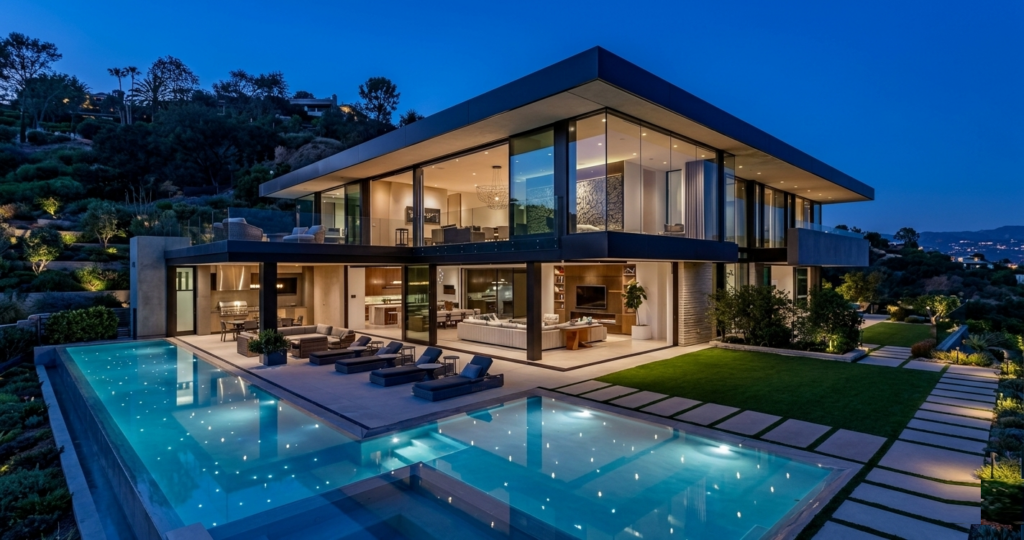
The same company that builds the pool looks after it, so the handover file never gets lost.
Further reading
More from our pool construction, design and maintenance library.
Construction and choosing a contractor
- Swimming pool contractor services
- Our swimming pool company
- Swimming pool companies in Dubai
- Swimming pools by Green Creation
- Pools in Dubai
- Swimming pools Dubai
- Building a swimming pool in Dubai
- What you need to know about pool construction in Dubai
- Building a custom pool, step by step
- Pool construction for villa owners
- Costs, materials and timelines
- Engineering for long-term performance
- What sets the best construction companies apart
- A buyer’s guide to pool construction companies
- Before you sign a pool contract
- Pool contractors in Dubai, a buyer’s guide
- Finding and working with the right pool team
- Choosing the best-rated pool contractor
- Pool construction costs and quality in the UAE
- Before breaking ground
- Pool construction mistakes to avoid
- Preparing your property for a pool
- Planning a pool in Dubai
- Quality and safety during construction
- Why hire local pool experts
- Case studies from Dubai pool projects
- In-ground or above-ground pools
Design and pool types
- Luxury pools
- Custom pools by Green Creation
- Infinity pools
- Indoor pools
- Rooftop pools
- Lap and plunge pools
- Choosing a pool shape
- Pools for small gardens
- Outdoor pools and their gardens
- Water features
- Smart pool technology
- Saving water and energy by design
- Eco-friendly pool construction
- What a pool adds to property value
- Luxury pool designs for homes
- Modern pool design trends
Maintenance and water care
- Professional pool maintenance
- Quality pool maintenance
- Residential pool maintenance
- Villa pool maintenance
- Commercial pool maintenance
- Swimming pool cleaning
- Weekly pool cleaning
- Pool maintenance across the UAE
- Pool water testing and analysis
- Algae prevention
- Pool water chemistry for owners
- DIY or professional maintenance
- Common pool problems in Dubai
- Signs your pool needs a professional
- Why regular inspections matter
Safety, rules and about us
Frequently asked questions
Who are the best swimming pool contractors in Dubai?
The best ones put the hidden details in writing: concrete cover, a witnessed flood test, pressure-tested pipes, a four-hour turnover, named equipment and a proper plant room. They also stay around after handover. Green Creation builds to that standard and maintains its pools afterwards, with in-house divers for underwater repairs.
What is the difference between a pool contractor and a pool construction company in Dubai?
People use the terms loosely. In practice, a turnkey contractor handles design, approvals, building and handover under one contract. A construction company might only build the shell and pipework as a subcontractor to a main contractor. Ask which parts each firm does with its own teams.
How much does swimming pool construction in Dubai cost?
A concrete villa pool of around 8 x 4 m usually falls somewhere between AED 120,000 and 230,000 before VAT. Plunge pools start lower, around AED 55,000, and infinity pools often pass AED 280,000. Access, finish, equipment and ground conditions move the price the most.
How long does it take to build a pool in Dubai?
A typical villa pool takes about eight to twelve weeks on-site once permits are in hand. Approvals add one to three weeks on the mainland and longer in communities where the developer NOC comes first. The flood test alone should add three or four days, and it is worth every one of them.
Do I need a permit to build a swimming pool in Dubai?
Yes. Depending on the plot, the approval comes from Dubai Municipality, Trakhees or the Dubai Development Authority, and most gated communities need a developer NOC first. A proper contractor prepares the drawings and handles the applications for you.
What is a flood test, and why does it matter?
It is filling the waterproofed shell before tiling and holding it full for 48 to 72 hours while measuring the level against a control container for evaporation. It proves the shell holds water, while any leak is still easy to reach. Skipping it is the most common reason for leaks; we trace them behind tiles later.
Why do pool tiles and grout fail so quickly in Dubai?
Dubai’s desalinated water is low in calcium, and it draws calcium out of standard cement grout and plaster. Epoxy grout or a pool-rated grout at the build, plus balanced water chemistry afterwards, stops most of it.
What turnover rate should a Dubai pool have?
Dubai Municipality’s pool guidelines ask for the whole volume to pass through the filter every four hours. For an 8 x 4 m pool of about 45 cubic metres, that works out to roughly 11 cubic metres an hour through the filter.
Is a variable-speed pump worth the extra cost?
In most Dubai villas, yes. It commonly uses 40% to 70% less energy than a single-speed pump, runs quieter and lasts longer. On a typical villa pool, the savings can pass AED 1,000 a year.
Should I choose a concrete or fibreglass pool in Dubai?
Concrete gives you any shape, size and finish and suits most villa projects. Fibreglass installs faster but comes in fixed shapes and needs crane access. Both last well if the ground, waterproofing and pipework are done properly.
Can a pool shell really float?
An empty one can be on plots with a high water table, such as reclaimed or coastal land. Groundwater pushes up on the shell. The structural design should check for uplift, and the handover file should explain how to drain the pool safely.
What should be in a pool contractor’s quote?
The shell method and concrete grade, the waterproofing system, the pump model, filter type and size, design flow, grout and adhesive types, lighting, safety items, permits, commissioning and the warranty. A quote that says “as required” for equipment leaves the choice and the saving with the contractor.
How should payments be structured on a pool build?
Tie each payment to a stage you can inspect, such as steel fixed, shell poured, flood test passed, tiling done and commissioning complete. Avoid large advances, and keep a small retention until the pool has been through its first summer.
What does Green Creation do differently from other pool contractors in Dubai?
We build, maintain and repair pools in the same company, so what our repair teams find feeds into how we build. We have in-house commercial divers who are qualified pool engineers; we design the pool and garden together, and we agree on every component and its cost with the client before we start.
Can Green Creation repair a pool it did not build?
Yes. A large share of our repair work is on pools built by other firms. We start with an inspection, trace the fault to its cause and then quote the fix, often without draining the pool.
Can pool leaks be fixed without draining the pool?
Many can. Our divers find and seal leaks around fittings, lights, cracks and loose tiles underwater. That saves tens of cubic metres of water and avoids the uplift risk of an empty shell on a high water table.
How long does a pool pump last in Dubai?
A single-speed pump often lasts four to seven years here, less so in a hot, unventilated plant room. Variable-speed pumps in a ventilated room commonly reach seven to ten years.
What safety features does a Dubai pool need?
At least two anti-entrapment main drains, ladders where the water is deeper than 60 cm, handrails on steps over 1 m deep, clear depth markings, a barrier of around 1.2 m where required, bonded metalwork and earth-leakage protection on pool circuits.
Do I need a chiller for my pool in Dubai?
Many owners add one, because pool water in summer can reach the low thirties and stop feeling fresh. A chiller or reversible heat pump brings it down in summer and can warm it in winter. It should be planned into the plant room from the start.
Is a saltwater pool better in Dubai?
A salt chlorinator makes chlorine on site and keeps levels steadier, which many owners like. The cell needs replacing every three to five years, and all metalwork and stone near the pool should be chosen to cope with salt.
How much does pool maintenance cost in Dubai?
For a standard villa pool, weekly or twice-weekly maintenance is commonly quoted around AED 800 to 1,600 a month. Repairs, parts and filter media are usually priced separately.
How often should a new pool be serviced?
Weekly for most villa pools, and more often in the first month after handover while new grout and tiles settle. In summer, busy or heavily shaded pools may need two visits a week.
What is a handover file, and why should I ask for one?
It is the folder of drawings, test results and manuals for your pool: steel inspection, cube tests, pressure tests, flood test, electrical tests, commissioning readings and warranties. Any future technician needs it, and a buyer will ask for it if you sell.
Does Green Creation build commercial pools?
Yes. We work as a turnkey contractor or as the pool subcontractor to main contractors on hotels, residential towers and communities, on pools up to Olympic size. Our clients have included Emaar, Meraas, Sobha, Deyaar, Hilton and Azizi.
Which areas of Dubai does Green Creation cover?
We build across Dubai and the wider UAE. Our residential maintenance teams work in communities including Palm Jumeirah, Arabian Ranches, JVC, Dubai Hills and Al Barsha.
How do I get a quote from Green Creation?
Call +971 50 948 4081 between 9am and 6pm, or contact us through green-creation.com. We visit the site, check access and ground, and send an itemised quote with every component named.
Planning a pool, or fixing one that someone else built?
Call Green Creation on +971 50 948 4081, 9am to 6pm. We visit the site and send an itemised quote with every component named.
Prices in this article are indicative Dubai market ranges excluding VAT, not quotations. Technical rules are summarised from Dubai Municipality’s published guidelines for swimming pool plans; your project’s approving authority and structural engineer have the final word.